


HONESTY IS THE ROOT
Quality is always satisfactory
Hotline
400-606-8981
PRODUCT CATEGORY
LATEST NEWS
MORE
PRODUCT DETAILS
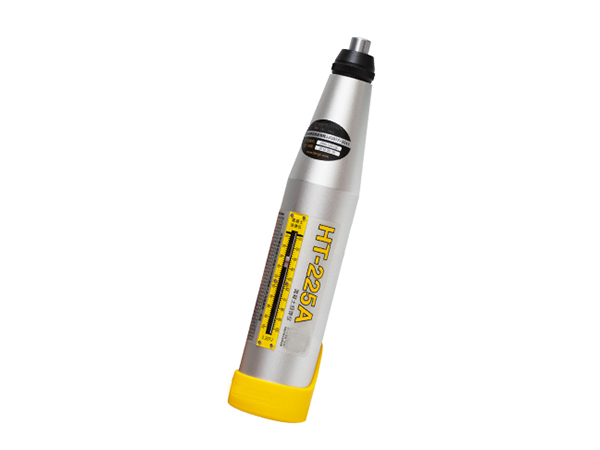
HT-22 concrete rebound tester is used for non-destructive testing of compressive strength of ordinary concrete in structural engineering
Compliant with the standard
TB 10426-2019 "Code for Testing the Strength of Concrete Structures in Railway Engineering"
JTS 239-2015 "Technical Code for Solid Testing of Concrete Structures in Water Transport Engineering"
JGJ/T23-2011 "Technical Code for Testing the Compressive Strength of Concrete by Rebound Method"
DB11/T 1446-2017 "Technical Code for Testing the Compressive Strength of Pumped Concrete by Rebound Method and Ultrasonic Rebound Comprehensive Method"
Rebound Method Related Landmarks in Various Provinces and Cities
Product Features
SWP Piano Spring has good resistance to elastic reduction and fatigue resistance;
NBR sealed dust ring protects the movement from cleaning and extends the maintenance cycle Refined machine movements such as fully CNC machining centers provide excellent and stable protection against rebound values Soft and wear-resistant rubber sleeve for comfortable operation of the rebound tester Fine grinding spherical zero adjustment screw, rebound firing smoother Improved pointer design, easy to adjust friction and stable The precision is suitable for aluminum alloy flanges that are not easily damaged, and the high-strength hooks are wear-resistant (based on actual reports) and not easy to hang empty The integrated design of the chassis ensures that the guide keys and supports are not damaged or detached; The button adopts stretching technology, which is not easy to fall offPointer length (mm) 20.0 ± 0.2
Pointer friction force (N) 0.65 ± 0.15
Spherical radius at the end of the striking rod (mm) 25 ± 1.0
At the scale line "100" of the decoupling position of the striking hammer
Stiffness of the striking tension spring (N/m) 785.0 ± 30
Working length of the striking tension spring (mm) 61.5 ± 0.3
Tensile length of the striking tension spring (mm) 75 ± 0.3
At the scale line "0" of the jumping position of the striking hammer
Steel anvil calibration Value 80 ± 2 (factory products are controlled between 80-81)